
Introduction
Making bread at home can seem daunting, but with the right recipe, it can be a rewarding experience. This Foolproof Ciabatta Bread recipe is designed for young professionals and homemade-food lovers who may be pressed for time yet still desire the aroma and taste of freshly baked bread. Imagine pulling a warm loaf from the oven, its crust perfectly golden and its interior soft and airy.
Ciabatta is an Italian bread known for its rustic appearance and delightful texture. The beauty of this recipe lies in its simplicity and the long fermentation process, which enhances flavor without requiring extensive hands-on effort. Set aside some time for the dough to rise, and you’ll be rewarded with loaves that are ideal for sandwiches or simply enjoyed with olive oil.
As you embark on this baking journey, remember that bread-making is as much about patience as it is about technique. This recipe uses just four key ingredients: all-purpose flour, water, instant yeast, and salt. Each plays a crucial role in achieving the perfect ciabatta. Whether you’re a seasoned baker or a first-timer, this guide will help you navigate the steps with confidence. So, let’s dive into the world of homemade ciabatta and discover how to make foolproof ciabatta bread that will impress your friends and family!
Key Ingredients
All-Purpose Flour (3 cups)
All-purpose flour is the backbone of this ciabatta bread, providing structure and a light, airy texture. It allows the bread to rise beautifully during fermentation, resulting in that classic ciabatta crumb.
Water (1 1/4 cups)
Water is essential for activating the yeast and hydrating the flour. The right amount of water also contributes to the dough’s stickiness, which is crucial for achieving that perfect ciabatta texture.
Instant Yeast (1/2 teaspoon)
Instant yeast is a fast-acting yeast that helps the bread rise without lengthy proofing times. It ensures a reliable rise, making this recipe foolproof and accessible for any home baker.
Salt (1 1/2 teaspoons)
Salt enhances the flavor of the bread and strengthens the gluten structure. It also helps control yeast activity, ensuring the dough ferments slowly and develops a rich flavor.
Using these key ingredients in the right proportions is essential for making foolproof ciabatta bread that delivers a crusty, airy result every time.

Why You’ll Love This Recipe
This Foolproof Ciabatta Bread recipe is a must-try for anyone looking to experience the joy of homemade bread without the stress. You’ll love the way the crust forms a beautiful golden exterior while the inside remains soft and airy. With just four simple ingredients, this recipe embraces the essence of Italian baking, making it accessible for busy young professionals.
One of the best features of this recipe is the long fermentation time, which allows the dough to develop complex flavors without requiring constant attention. Just imagine waking up to the smell of freshly baked ciabatta, ready to be enjoyed with breakfast or as part of a delightful sandwich at lunch. The versatility of ciabatta means it pairs wonderfully with everything from olive oil for dipping to hearty soups.
Whether you’re a novice baker or a seasoned pro, you’ll appreciate how straightforward this process is. With minimal hands-on time, you can confidently create a loaf that will impress your friends and family. It’s the perfect addition to any meal or a lovely treat to share during gatherings. So, if you’re wondering how to make foolproof ciabatta bread, this recipe will guide you every step of the way!
Variations
Herb-Infused Ciabatta
For a delightful twist on your ciabatta, consider adding fresh herbs like rosemary or thyme to the dough. Simply chop the herbs finely and fold them in during the mixing stage. This will impart a fragrant aroma and elevate the flavor profile, making your bread a perfect addition to any meal.
Olive and Sun-Dried Tomato Ciabatta
Add a Mediterranean flair by incorporating chopped olives or sun-dried tomatoes into the dough. These ingredients not only contribute to the visual appeal but also enhance the overall taste. Just ensure that the additions are well-drained to maintain the dough’s consistency.
Whole Wheat Ciabatta
For a healthier version, you can substitute part of the all-purpose flour with whole wheat flour. This variation will yield a denser loaf with a nutty flavor while still keeping the essence of ciabatta. Adjust the hydration slightly if needed, as whole wheat flour absorbs more water.
Experimenting with these variations allows you to customize your ciabatta bread to suit your taste preferences. Each version retains the core characteristics of the original recipe while adding a unique touch to your baking repertoire.
Cooking Tips and Notes
Use a Kitchen Scale
For the most accurate results, consider using a kitchen scale to measure your flour and water. This will ensure that you achieve the perfect dough consistency, which is crucial for making foolproof ciabatta bread. A well-measured dough leads to a more consistent rise and texture, enhancing your baking experience.
Don’t Rush the Rising Process
Patience is key when it comes to bread-making. Allowing the dough to rise for the full 12-18 hours will develop its flavor and texture. If you’re pressed for time, resist the urge to shorten this process; the longer fermentation will reward you with a crusty, airy loaf that’s worth the wait.
Handle the Dough Gently
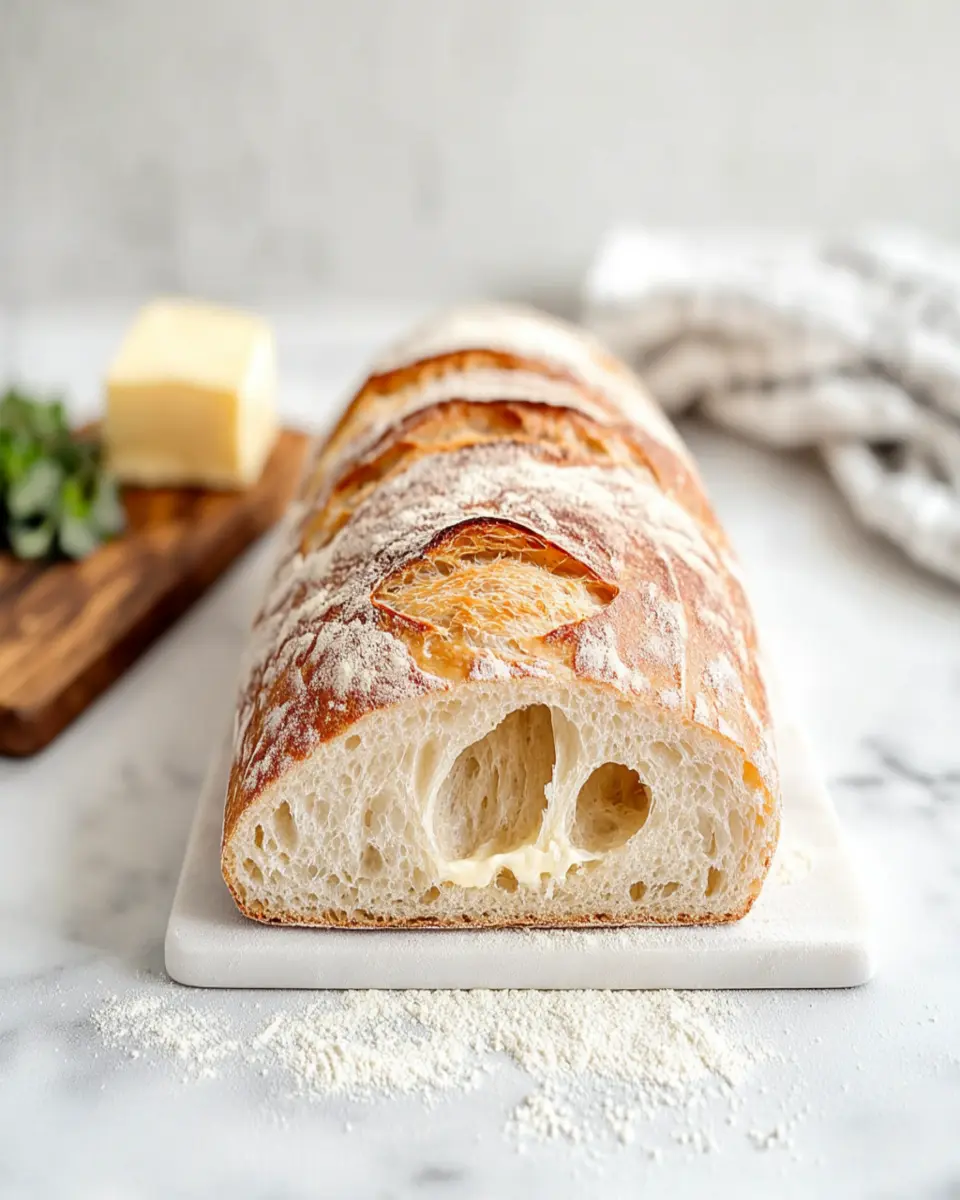
When shaping your ciabatta, remember to handle the dough gently. Overworking the dough can deflate those precious air bubbles that form during fermentation. Lightly shaping the dough will maintain its structure and ensure the final product has that desirable open crumb.
Baking in a Dutch Oven
Preheating your Dutch oven is essential for achieving a crispy crust. The steam created inside the pot during the initial baking phase mimics a professional bread oven, allowing the bread to rise beautifully and develop a golden crust. Be cautious when placing the dough in the hot pot to avoid any burns!
With these cooking tips and notes, you’ll enhance your ciabatta-making skills and ensure a delicious result every time.
Serving Suggestions
Enjoying Your Ciabatta
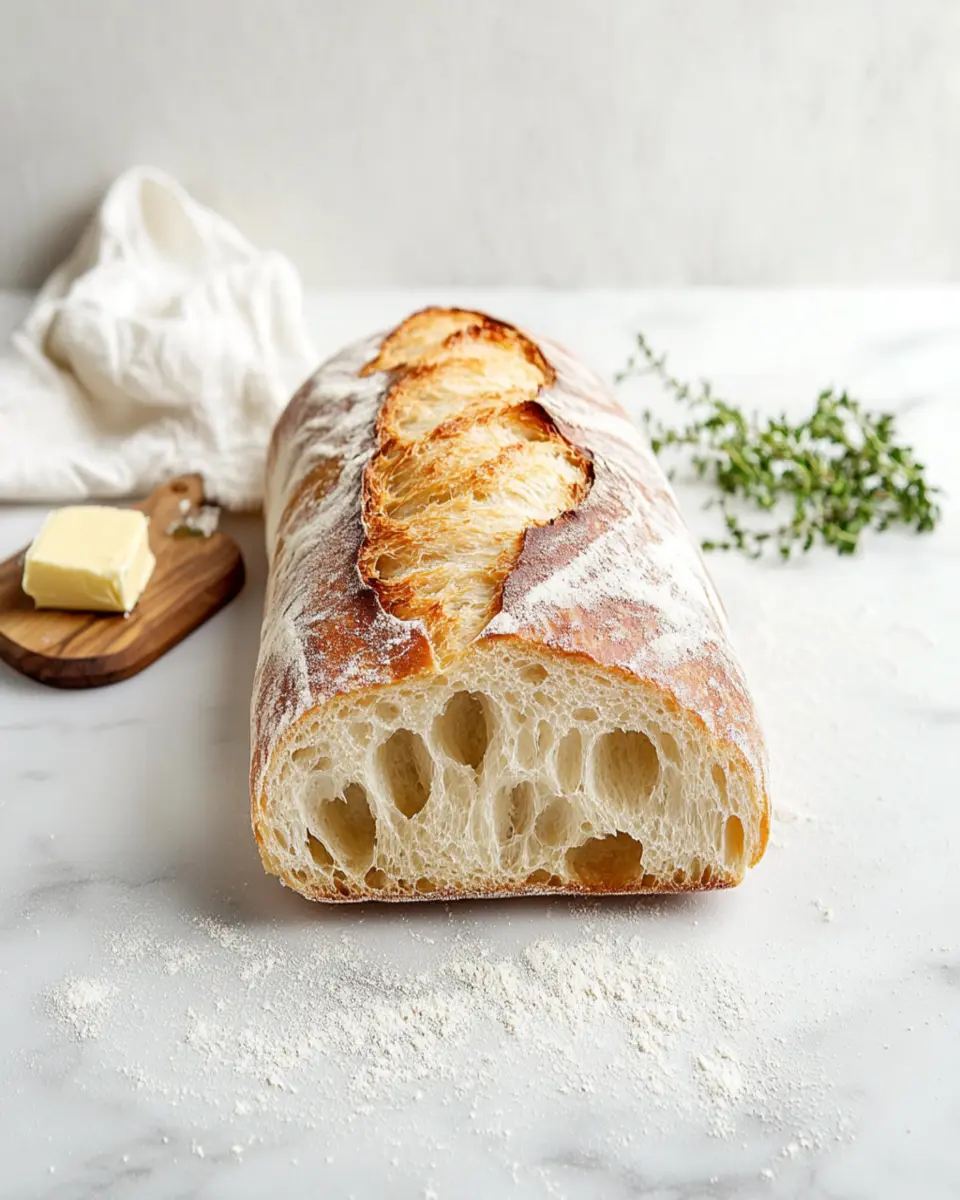
Once your ciabatta bread is baked to perfection, the possibilities for serving it are nearly endless. Enjoy it fresh out of the oven with a drizzle of olive oil and a sprinkle of sea salt, allowing the simple flavors to shine through. The crusty exterior and soft, airy interior create a delightful contrast that will have everyone coming back for seconds.
Perfect Pairings
Ciabatta also makes an excellent base for sandwiches. Layer it with your favorite ingredients—think fresh mozzarella, basil, and ripe tomatoes for a classic Caprese sandwich, or layer it with cured meats and arugula for a hearty Italian sub. Pair it with a light soup or salad for a complete meal, or simply serve slices alongside a cheese platter for an elegant appetizer.
Creative Uses
If you have leftover ciabatta, consider transforming it into croutons or bread pudding. Cube the bread, toss it with olive oil, herbs, and garlic, then bake until golden for a crunchy topping on salads or soups. Alternatively, use it in a sweet bread pudding with custard and your choice of fruits for a delicious dessert. With ciabatta, you’ll find that it’s not just a loaf of bread, but a versatile ingredient that enhances a variety of dishes.
Time Breakdown
Preparation
To prepare the dough, set aside about 10 minutes to mix the ingredients. This initial step is quick and simple, making it easy to fit into a busy schedule.
Cooking/Baking
Once the dough has risen, the baking process takes approximately 50 minutes: 30 minutes with the lid on and 15-20 minutes uncovered for that perfect crust.
Total
Overall, the total time for this recipe is around 18 hours, most of which is hands-off fermentation. This long rise is essential for developing the ciabatta’s signature flavor and texture. For efficiency, consider preparing the dough in the evening and baking it the next day for a delightful homemade bread experience!
Nutritional Facts
Overview
Enjoying homemade ciabatta bread is not only a treat for your taste buds but also a satisfying experience for your body. Each slice of this delightful ciabatta delivers a balanced nutritional profile that complements a variety of dietary needs.
Per Serving Breakdown
With a serving size of one slice, ciabatta bread contains approximately 130 calories, making it a great option for a light meal or snack. Each slice contains 1 gram of total fat and provides 4 grams of protein, ensuring you stay energized throughout the day. Additionally, it has 26 grams of carbohydrates, including 1 gram of dietary fiber, which aids in digestion.
This ciabatta is low in cholesterol and contains 150 mg of sodium, making it a heart-friendly choice. Perfect for pairing with olive oil, cheeses, or fresh vegetables, this bread can easily fit into a vegetarian diet while providing a satisfying and delicious experience.
FAQ based on “People Also Ask” section
What is the best way to store ciabatta bread?
To keep your ciabatta bread fresh, store it at room temperature in a bread bag or wrapped in a clean kitchen towel. Avoid plastic bags, as they can trap moisture and make the crust soggy. If you need to keep it longer, consider freezing it, then simply reheat in the oven for a few minutes before serving.
How can I achieve a better crust on my ciabatta?
For a crustier ciabatta, ensure your Dutch oven is preheated before placing the dough inside. Additionally, you can add a pan of water to the oven while baking to create steam, which helps develop a crispy crust. Lastly, baking the bread uncovered for the last 15-20 minutes will enhance the golden color and texture.
Can I use whole wheat flour instead of all-purpose flour?
Yes, you can use whole wheat flour to make ciabatta bread; however, it may result in a denser loaf. If you substitute whole wheat flour for all-purpose flour, consider adding a bit more water to maintain the dough’s hydration, as whole wheat flour absorbs more moisture.
How do I know when the ciabatta is done baking?
Your ciabatta is done baking when it has a rich golden-brown crust and sounds hollow when tapped on the bottom. Using a thermometer, the internal temperature should reach around 200°F (93°C). Allow it to cool on a rack before slicing for the best texture.
Conclusion
Making ciabatta bread at home is a rewarding experience that combines simplicity with delicious results. This Foolproof Ciabatta Bread recipe guarantees a crusty, airy loaf that will impress your friends and family. The long fermentation process enhances flavor while requiring minimal hands-on effort, making it ideal for busy young professionals.
As you embark on your baking journey, remember to embrace the process and enjoy the delightful aromas that fill your kitchen. Whether you enjoy it fresh, as a sandwich, or with a dipping oil, this ciabatta will quickly become a staple in your home. Don’t hesitate to share your baking results—cook, save, share, or comment with your experiences!
Print
Foolproof Ciabatta Bread
- Total Time: 18 hours
- Yield: 2 loaves 1x
- Diet: Vegetarian
Description
This Foolproof Ciabatta Bread recipe will ensure you have crusty, airy, and delicious bread every time!
Ingredients
- 3 cups all-purpose flour
- 1 1/4 cups water
- 1/2 teaspoon instant yeast
- 1 1/2 teaspoons salt
Instructions
- In a large bowl, mix the flour, water, yeast, and salt until well combined.
- Cover the bowl with plastic wrap and let the dough rise at room temperature for 12-18 hours.
- After the dough has risen, transfer it to a floured surface and divide it into two pieces.
- Shape the pieces gently, being careful not to deflate them too much, and place them on a floured baking sheet.
- Let the shaped dough rise for about 30-60 minutes.
- Preheat your oven to 450°F (232°C) with a Dutch oven inside.
- Once preheated, carefully place the dough into the hot pot and cover it with the lid.
- Bake for 30 minutes with the lid on, then remove the lid and bake for an additional 15-20 minutes until golden brown.
Notes
- For best results, use a kitchen scale to measure your flour and water.
- Ensure your dough is sticky; it is a good indication of a proper ciabatta texture.
- Prep Time: 10 minutes
- Cook Time: 50 minutes
- Category: Breads
- Method: baking
- Cuisine: Italian
Nutrition
- Serving Size: 1 slice
- Calories: 130
- Sugar: 0g
- Sodium: 150mg
- Fat: 1g
- Saturated Fat: 0g
- Unsaturated Fat: 0g
- Trans Fat: 0g
- Carbohydrates: 26g
- Fiber: 1g
- Protein: 4g
- Cholesterol: 0mg